
Opening Round and the Richmond–Carlton opener are different questions
The AFL has returned to an opening round involving every club in 2027, but Richmond and Carlton will not play on their familiar Thursday night. Those decisions can sound contradictory if the word opener is doing too much work. They concern different things: how the competition begins as a whole, which game starts the season, and where a particular rivalry sits within the first round.
The official Round One announcement confirms nine games involving all 18 clubs from Wednesday 17 March to Sunday 21 March. There is no separate partial Opening Round ahead of that programme. Richmond's opening match is still against Carlton, still at the MCG, but now starts at 12:35pm local time on Saturday 20 March. Understanding those facts separately makes the debate considerably clearer.
A full opening round restores a common starting line
The attraction of a complete first round is easy to explain to a supporter reading the ladder. Once that round finishes, each club has played its opening match. The season starts with everybody involved, rather than requiring followers to distinguish a preliminary set of fixtures from the first full national round. That is a structural change in the presentation of the competition, not an announcement about which Victorian rivalry deserves priority.
AFL chief executive Andrew Dillon attributed the return to feedback in the announcement. That supports saying the league responded to concerns about the opening structure. It does not justify inventing a poll, attaching a percentage to supporter approval or claiming every club made the same request. The confirmed outcome is the useful fact: all clubs are included in the first nine-game round.
Nor does a shared starting line mean the opening experiences are identical. The round still runs across five days, and the clubs face different travel, opponents and starting times. The benefit is a simpler competition-wide beginning. It is not a guarantee of equal preparation or an argument that individual fixture complaints no longer matter.
The first match is now Sydney against Geelong
Sydney and Geelong open the season at the SCG on Wednesday 17 March at 7:30pm local time. Fremantle hosts the Western Bulldogs at Optus Stadium on Thursday, and Hawthorn plays Brisbane at the MCG on Friday. Richmond and Carlton therefore have both lost the familiar Thursday slot and moved behind other matches in the national launch. Their own season still begins with the rivalry.
That distinction matters when somebody says the traditional opener has been abolished. The Richmond–Carlton pairing has not been removed from the opening round. Its placement has changed. Meanwhile, the separate Opening Round structure has gone. A supporter can welcome the return of every club to the same round while regretting the loss of a familiar Thursday-night ritual. Those positions are entirely compatible.
The immediate cause of the Melbourne scheduling constraint is also more specific than a broad argument about tradition or television appeal. The MCG is occupied by anniversary Test cricket before AFL access begins. The crucial dates explain why the normal Thursday arrangement cannot simply be restored within the announced first week, even though the rivalry itself remains on the fixture.
The MCG availability window explains the Saturday move
The key constraint is the MCG's calendar. Australia and England are scheduled to play the 150th anniversary Test there from 11 to 15 March. The AFL announcement states that access for the football season begins on Friday 19 March. Thursday 18 March therefore falls outside the access window that the league has published. Keeping the traditional Thursday match at the same ground in that week is not a straightforward option.
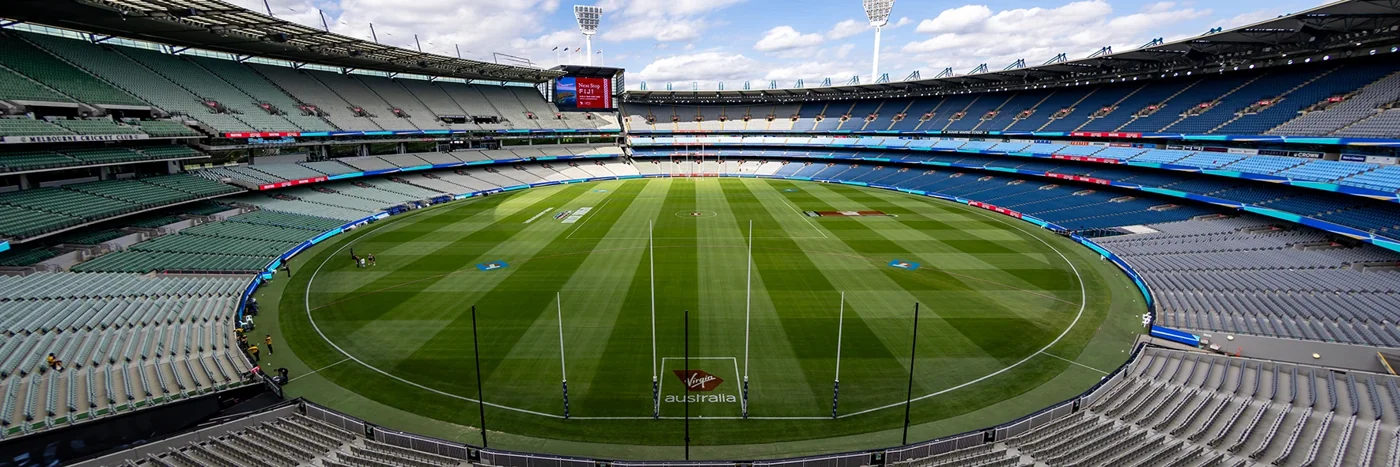
The announced order uses the ground from Friday evening for Hawthorn against Brisbane. Richmond and Carlton play early on Saturday, followed at night by St Kilda and Collingwood. Melbourne and Essendon follow on Sunday. That is the programme supporters should use for their planning. It also explains why saying simply that Richmond and Carlton lost the season opener leaves an important operational fact out of the story.
There is, however, a distinction between explaining a constraint and proving a particular solution was the only possible one. The official dates explain why Thursday at the MCG was unavailable. They do not demonstrate that a 12:35pm Saturday start was the sole imaginable alternative. Deciding which matches occupy Friday, Saturday afternoon and Saturday night still involves scheduling choices. Supporters can accept the venue issue and continue to question the allocation within the available window.
This is a better way to assess the dispute than treating cricket as an intruder or football tradition as an unconditional reservation. The MCG serves both sports. The fixture announcement sets out the resulting access date, and the league has arranged its opening round around it. There is no need to invent precise turf-conversion requirements, ground preparation deadlines or behind-the-scenes negotiations to explain a publicly stated access restriction.
The MCG's own event page independently lists Richmond against Carlton for Saturday 20 March at 12:35pm. That provides a useful check for visitors because it is the local venue clock, not a time converted for another state. Someone travelling from interstate should keep both the Melbourne match time and their own transport's local departure and arrival times in view.
At the time of checking, the venue page leaves ticket on-sale information and gate-opening times to be announced. A confirmed first bounce is not a confirmed entry plan. Supporters should avoid assuming when they can enter the stadium or that a particular ticket category is already available. Those details belong to the later match-day information, and an article explaining the scheduling controversy should not fill them in from habit.
The Saturday double-header also warrants care. Two matches being scheduled at the same venue on the same day does not establish the conditions of admission for either one. A supporter considering both should check the official ticket arrangements when they are released. The fixture tells you which games are being played; it does not, by itself, sell a combined entitlement to watch them.
Why Richmond still objects to the new slot
Richmond's response is more nuanced than a refusal to accept the MCG problem. In the club's announcement, chief executive Shane Dunne acknowledges the availability issue while expressing disappointment about the lost Thursday night and the barriers created by the early Saturday start. Recognising the constraint and disliking the replacement are not contradictory positions.
Tradition is more than ownership of a television night
A recurring opening fixture gives supporters a familiar way into the season. It can organise the week around a rivalry, reconnect a group of friends and provide a known occasion for members returning after the summer. These are reasons a tradition can acquire value beyond the quality of the two teams in one particular year. A club does not need to be a premiership favourite for its supporters to care deeply about the match.
That does not give Richmond or Carlton an unrestricted claim on the first major television occasion every season. The AFL has to launch a national competition, and there is a defensible sporting attraction in showcasing other match-ups. Supporters can assess that argument without accepting the stronger assertion that an established rivalry has become worthless. The value of the new opening contests and the value of the old ritual are not mutually exclusive.
The historical account also needs precision. The AFL's report on Richmond's reaction identifies 2014 as an exception to the familiar Round One arrangement because of MCG availability. That is a useful warning against saying the Thursday opener has occurred without interruption in every season. Tradition can be strong without being literally unbroken, and acknowledging an exception does not weaken the emotional connection supporters have developed.
Early Saturday changes the attendance and viewing calculation
A 12:35pm start changes what supporters must arrange around the match. Someone with Saturday work, a local sporting commitment or a longer journey into Melbourne may face a different barrier from a person attending after work on Thursday. Conversely, another household may prefer an afternoon return to a late night. These are conditional examples of how schedules work, not findings from a survey of Richmond or Carlton members.
That is why Dunne's objection should be reported in its actual scope. The club says the slot creates barriers for some supporters. It has not supplied proof that every supporter is disadvantaged or that a particular attendance decline is inevitable. Dunne also expresses confidence that Richmond fans will turn up. A crowded ground, if it occurs, would not demonstrate that nobody had difficulty attending; people can make considerable sacrifices for a match they value.
There is a separate viewing change. The AFL's opening-round list labels Richmond–Carlton as a Kayo match, while identifying four other games for Seven. Supporters accustomed to associating the rivalry with a particular free television night should check the actual free-to-air listing for their market. The fixture's start time and the method of watching it are different pieces of information, both of which can affect the experience.
The sound editorial judgement is to give the club's concern its proper weight without turning it into a claim of exclusive ownership. The rivalry remains valuable, the replacement slot creates genuine scheduling questions, and the MCG constraint is publicly documented. Supporters deserve an explanation that keeps all three in the frame instead of using one to dismiss the others.
What is confirmed for 2027, and what remains only a 2028 expectation
For 2027, the essential planning information is clear: Richmond hosts Carlton at the MCG on Saturday 20 March, starting at 12:35pm Melbourne time. The Round One fixture places it within a complete nine-game round involving every club. Supporters should arrange their plans around that published match, while checking ticketing and venue information as it becomes available.
The 2028 position needs a different description. Dunne says Richmond understands the change to be a one-year arrangement and looks forward to a return to Thursday night. That is the club's stated understanding and expectation. It should not be rewritten as a released AFL fixture for 2028, a confirmed date or a guarantee of particular broadcast coverage. Keeping the attribution intact is especially important when supporters are trying to work out whether the change is permanent.
One way to follow the issue is to separate the question into three columns. The first contains published facts: the 2027 date, start and venue. The second contains explanations: the Test match and the Friday access window. The third contains future expectations: the club's view of what should happen in 2028. A persuasive headline can still be precise about those differences, and a fan does not need to confuse them to make a strong case for the tradition.
Before buying a ticket or arranging travel, check the actual on-sale information rather than assuming the historic opening fixture's arrangements will repeat. Membership access, public tickets, entry times and any conditions relating to the later MCG game need their own confirmation. The fact that the pairing is familiar is not evidence that every logistical detail will be identical. This matters even for regular attendees who know the stadium well.
The early start also invites a fresh journey calculation. Work backwards from the first bounce, allow for whatever entry advice the venue publishes, and check the return trip separately. Visitors from another time zone should use the date-specific local time in their transport planning. None of this requires treating a Saturday afternoon as inherently worse than Thursday; it simply recognises that a changed start can alter the whole day.
As the match approaches, the useful discussion will become more concrete. How practical is entry for the people who want to attend? What do the clubs say about the supporter's experience? Does the afternoon retain the rivalry's familiar intensity? Those questions can be assessed with actual information. Forecasting a disastrous crowd or declaring the experiment an unquestionable success in November would run ahead of the evidence.
The broader lesson is that a fixture tradition can survive a temporary change while still deserving serious consideration. Richmond and Carlton remain together in Round One; the competition returns to an all-club opening; the MCG's cricket commitments rule out the usual Thursday in that week. The argument left for the league is how well its chosen replacement serves supporters. That is a more useful debate than pretending either that nothing has changed or that the rivalry itself has disappeared.
A later official fixture release is what will settle the next step. Until then, the useful wording is that Richmond expects a return, rather than that supporters already have a date to reserve. If the traditional slot does return, the league can explain how the exceptional 2027 venue circumstances were resolved. If it does not, a different explanation will be required. Neither outcome should be assumed from a club statement about its current understanding.
There is also a fair standard for judging any alternative arrangement: identify the obstacle it solves and the new burden it creates. Here the published venue window explains the Thursday obstacle. The club's response identifies the burden of an early Saturday. Holding both facts together allows a discussion about whether another allocation would serve fans better, rather than simply asking which side has won an argument about history.
Join the conversation
Share a question or a thought about AFL. Comments are reviewed before they appear. Keep it friendly and on topic.
No comments yet. Start the conversation.
Sign in with Google to leave a comment. Your email address is not displayed.